
THREE SEALANTS. THREE DIFFERENT JOBS.
The right choice comes down to four things: whether the joint moves, whether there is water and weathering, what materials you are working on, and whether it will be painted.
The simplest rule: SILICONE when water resistance and elasticity matter most. PU when the joint is structural and subject to movement, load or weathering. ACRYLIC when you work indoors, movement is small and you want to paint over it.
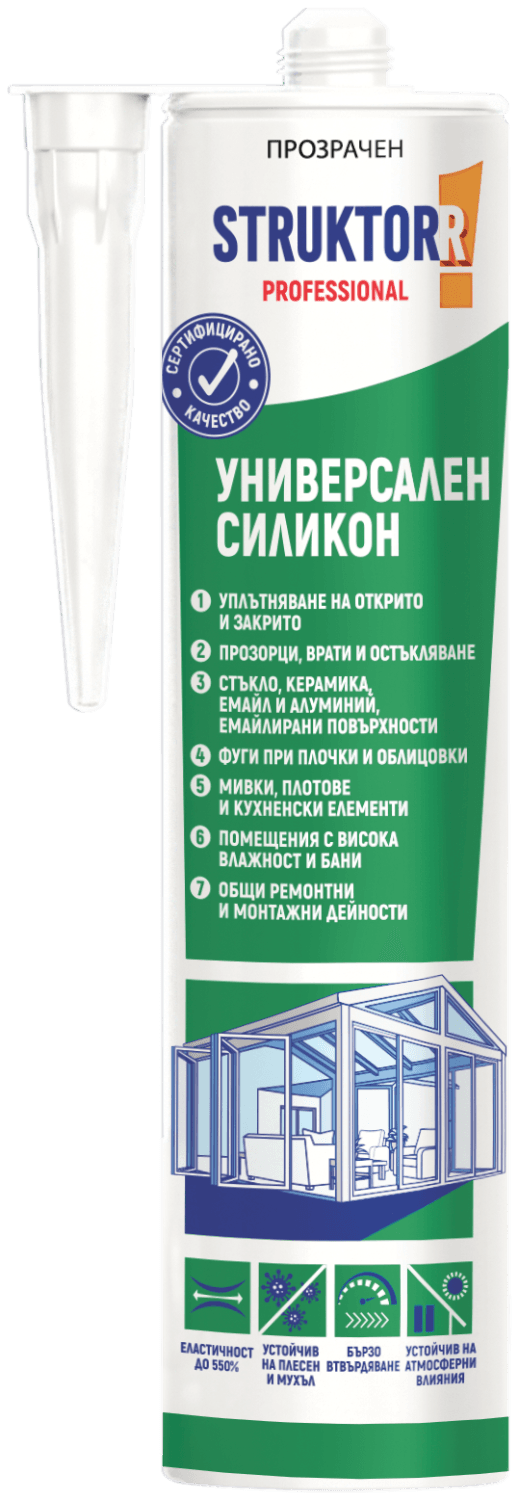
- Sinks, worktops and sanitaryware
- Glass and glazing
- Joints exposed to moisture and weathering
- Joints between non-porous materials
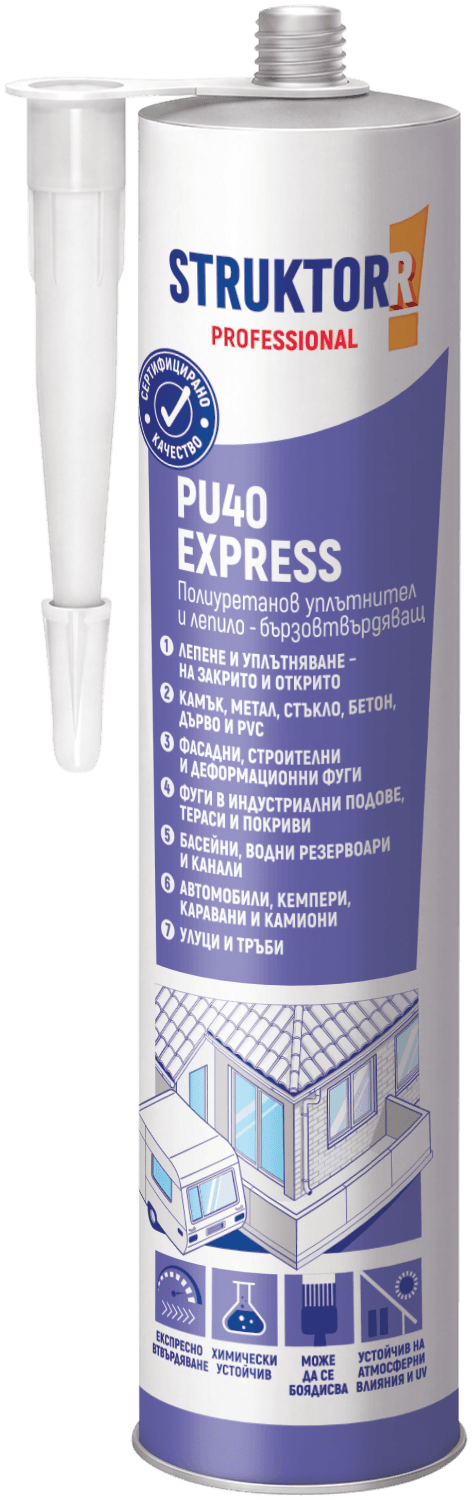
- Concrete and movement joints
- Façades and roof details
- Metal structures and sandwich panels
- Sealing with strong bonding
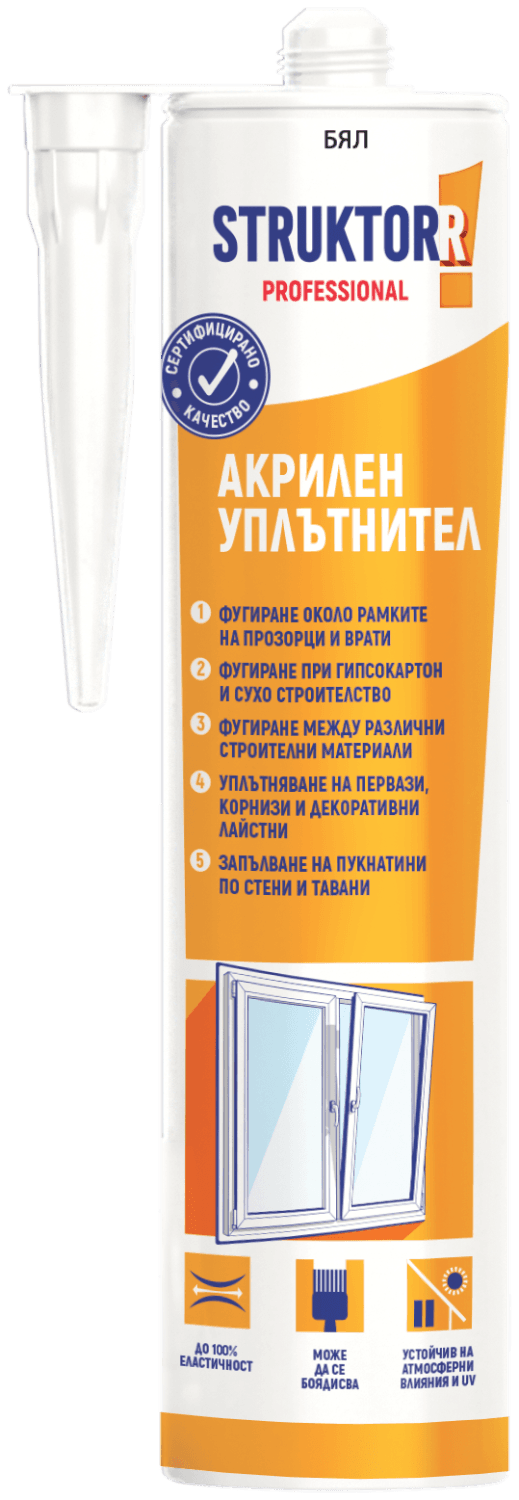
- Wall-to-ceiling joints
- Door frames and interior windows
- Cracks in plaster before painting
- Skirtings and decorative profiles
WHEN TO CHOOSE SILICONE
Silicone is the right choice when the joint must stay elastic and resistant to water, temperature and weathering. It suits many non-porous surfaces such as glass, ceramics, glazed tiles and certain metals.
Choose silicone forjoints around sinks and worktops; tile-to-sanitaryware joints; glass and glazing where the specific product is suitable; joints around windows and other building elements according to the application; joints between dissimilar materials that need good elasticity; interior and exterior joints exposed to moisture and weathering, where the product data allows it.Once cured, silicone stays highly elastic and takes repeated joint movement. It has very good resistance to water, UV and temperature change.
ImportantMost standard silicones cannot be painted. If the joint has to be coated, ordinary silicone is usually not the right choice.Not every silicone suits every material. Natural stone, mirrors, some metals, plastics and sensitive surfaces need a silicone explicitly intended for that application.
WHEN TO CHOOSE A PU SEALANT
PU stands for polyurethane. It is the typical choice when you move from a finishing joint to a real construction joint. A PU sealant combines good elasticity with high mechanical resistance and very good adhesion to a range of building materials.
Choose PU forjoints in concrete; façade joints; construction and movement joints; concrete-to-metal connections; joints between dissimilar building materials; industrial floors; terraces and roof details where the system allows it; metal structures; installation of metal and sandwich panels; vehicle manufacturing; campers, caravans and trucks; applications that need strong bonding as well as sealing.A PU sealant fits where the joint has to move, stay strong and carry mechanical load at the same time. That is why polyurethanes are widely used on concrete, façades, floors and industrial structures.
One more advantageUnlike standard silicone, many PU sealants can be painted after full cure. Always check compatibility with the specific paint first.WHEN TO CHOOSE ACRYLIC
Acrylic suits interior finishing work where the joint has little or no movement. Its big advantage is that it can be painted once dry.
Choose acrylic forwall-to-ceiling joints; joints around door frames; interior joints around windows; plasterboard-to-element connections; small cracks in plaster; joints around skirtings and decorative profiles; small holes and irregularities before painting; finishing joints between interior elements.It applies easily, cleans up easily while fresh and, most importantly, takes paint. That makes acrylic one of the most practical products for painting and interior finishing.
Acrylic sealant has a significantly lower movement capability than high-grade silicone and PU sealants. It is not the first choice for:
- joints with substantial movement
- permanently wet areas
- joints under high mechanical load
- applications the specific product is not approved for
QUICK CHOICE ON SITE
Application Silicone PU Acrylic Ceramics and glass ✓ depends on substrate – Wet areas ✓ depends on product – Wall-to-ceiling joint – – ✓ Crack in plaster before painting – – ✓ Around skirtings and trim – ✓ ✓ Concrete construction joint depends on product ✓ – Movement joint depends on product ✓ – Façade ✓ ✓ depends on product Metal structure depends on product ✓ – Sandwich panels depends on system ✓ – Industrial floor – ✓ – Camper / caravan depends on application ✓ – Has to be painted usually not ✓* ✓ Strong bonding + sealing – ✓ – * After full cure and a paint compatibility check.
THE SIMPLEST RULE
If you are still unsure, ask yourself these three questions.
Is there water?Yes — think silicone first. On a construction joint, concrete, metal or under higher mechanical load, check whether PU is the better choice.Does it have to be painted?Yes — acrylic for an ordinary interior joint. Yes, but the joint moves or is loaded — PU.Is the joint between building elements and moving?Yes — PU, or a suitable high-performance silicone depending on the application.
- SILICONE UNDER PAINTPaint usually does not adhere properly to standard silicone. If the joint will be painted, choose a suitable acrylic, PU or other paintable sealant up front.
- ACRYLIC IN A JOINT WITH REAL MOVEMENTIt can look fine at first. Once the elements move, the joint can crack or debond. Acrylic is intended mainly for joints with limited movement.
- CHOOSING BY MATERIAL ALONEConcrete equals PU, tiles equal silicone — that is not enough. You also need to know where the joint is, how much it moves, whether there is water, whether it will be painted and what load it carries.